What Conditions Would Require Dental Bridges?
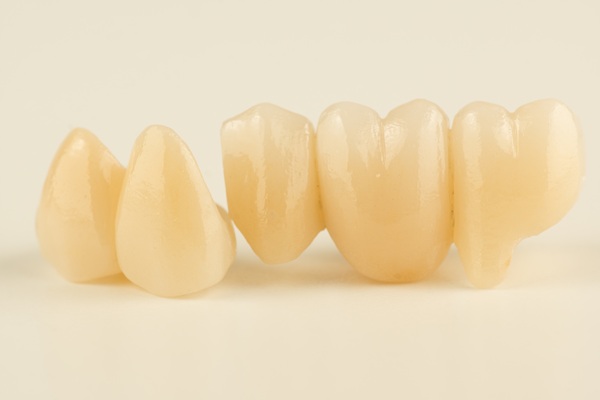
Dental bridges are a type of dental restoration for teeth that involve the use of artificial tooth replacement. It can be used to replace missing teeth or in cases where all of an individual's natural teeth have been lost.
The bridge is fixed between two healthy teeth. The bridge spans over this area with crowns on each end. It is supported by metal clasps that attach to the neighboring natural teeth. There are many reasons why people may require bridges. These include extracting one or more (permanent) teeth, loss of a permanent molar due to traumatic injury, periodontal disease, post-extraction alveolar ridge defect, and congenital absence from birth.
Extraction of one or more natural teeth
Extraction of one or more natural (permanent) teeth is a common reason for dental bridges. Dental implants are sometimes a preferable alternative in these cases but depending on what teeth have been lost and other factors such as bone density can make this option too expensive or not possible at all. Suppose you're considering having a bridge to fill your gap. In that case, we recommend that you discuss whether implant replacement is more appropriate.
Dental bridges help fill gaps where tooth loss due to extractions, trauma injury, or periodontal disease. It is fixed between two healthy neighboring teeth on either side of the gap and spans over it with crowns attached at each end supported by metal clasps that attach onto natural teeth around them.
Loss of a permanent molar due to traumatic injury or periodontal disease
Loss of a permanent molar due to traumatic injury or periodontal disease could be why a dental bridge would be necessary. It is crucial to have a dental bridge fitted if you are missing a molar, as it is the tooth that holds other teeth in place and gives your mouth its shape. Molars also help keep food from accumulating between adjacent teeth where bacteria can form and cause gum disease, which will affect your smile and lead to further issues with health such as heart disease, diabetes, etc.
A treatment plan for a bridge would involve removing any decay present on neighboring healthy teeth before crowns (the correct material depends on the severity of damage) are attached. Crowns must be carefully shaped, so it fits together perfectly when pressed down firmly into position at each end after being implanted.
Post extraction alveolar ridge defect
Post extraction alveolar ridge defect is another reason for dental bridges. Dental implants are a more common dental bridge restoration, but in this case, healthy teeth must be removed to make room for the bridge. It can also be used as part of implant treatment that involves dental implants.
Dentists will often recommend dental bridges if:
- You have lost one or several teeth and want to fill these spaces with your own natural looking restored tooth/teeth;
- Your remaining teeth need protection from further decay.
Congenital absence from birth
Congenital absence from birth is another reason for dental bridge treatment. They can be used for cosmetic reasons, such as correcting a gap between your teeth. They are often recommended by dental professionals when a tooth has been lost due to decay or accident and is not going to grow back naturally.
In the case of anterior (front) dental bridge restorations, one false tooth will sit on either side of those spaces;
For posterior (back) dental bridges: two false teeth will fill gaps left after removing several natural teeth - usually molars but sometimes incisors too. The shape and size of a dental bridge should closely match adjacent natural teeth, so it blends in.
Request an appointment here: https://www.gilkersondental.com or call Gilkerson Family Dentistry at (681) 253-3421 for an appointment in our Morgantown office.
Check out what others are saying about our dental services on Yelp: Dental Bridges in Morgantown, WV.
Related Posts
Patients comparing implant crowns and traditional crowns often want a clear, practical explanation. Implant-supported crowns replace a missing tooth by attaching to a dental implant, which functions as an artificial tooth root placed in the jawbone. Traditional crowns cover and reinforce an existing natural tooth after decay, fracture, or a large filling. Both restore shape,…
An implant crown restores chewing, speech, and smile balance, yet its longevity depends on daily care and smart habits. Unlike a natural tooth, the crown will not decay, but the surrounding gums and bone can develop inflammation called peri-implantitis. This condition weakens support and risks failure. However, consistent home care and routine professional maintenance help…
When you have severe pain or unexpected dental trauma, getting emergency dentistry should be your first priority. If you experience sudden tooth pain, a general dentist is usually the go-to provider. Many people worry that their regular dental office cannot handle urgent issues. However, general dentists have the tools and training to treat serious oral…
A high-quality dental implant restoration provides a stable and beautiful way to complete a smile, yet even the most durable materials eventually show signs of daily wear. While the metal post often remains a permanent part of the jaw, the restoration can age, chip, or loosen over several years. Recognizing the warning signs below helps…